Thursday, June 28, 2012


Monday, June 18, 2012
Wednesday, June 13, 2012
Tuesday, June 12, 2012
Monday, June 11, 2012
Saturday, June 02, 2012
A beautiful find
Via Light Blue Touchpaper: The recently declassified contributions of John Nash to the science of cryptology.
Friday, June 01, 2012
From Einstein to Innovation
Reading:
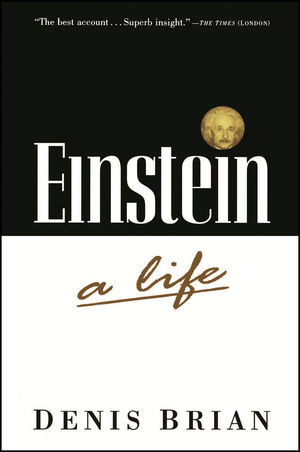
Einstein: A Life by Denis Brian
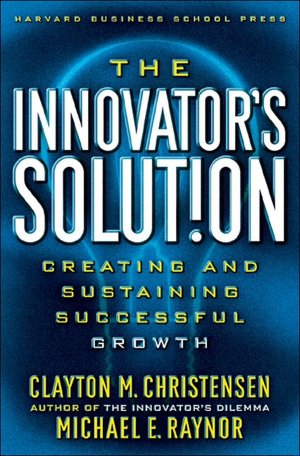
The Innovator's Solution by Clayton M. Christensen and Michael E. Raynor
Einstein: A Life by Denis Brian
The Innovator's Solution by Clayton M. Christensen and Michael E. Raynor
Thursday, May 31, 2012
Friday, May 25, 2012
Thursday, May 24, 2012
A Brush with Bra
A few weeks ago, quite by chance, I encountered (that's the only way I can describe it) one of my musical heroes: Bra Hugh Masekela. He was much shorter than I expected and seemed to be bristling with energy. He also turned out to be extremely warm and friendly. On their way out, Bra Hugh and his friend walked past the table where I was sitting with a friend. As they did so they said hello (doubtless my earlier attempts at discreet gawking had failed miserably):
And off they went galloping into the sunset.
Bra Hugh and friend: How are you guys!?
Me: Fine...I love your music!
Bra Hugh: It's not mine, I just found it here!
And off they went galloping into the sunset.
Sunday, May 20, 2012
The Puritan Gift
On my book wishlist:

Update (24 May 2012): Peter F. Drucker's comments on a very early draft of The Puritan Gift.
Update (24 May 2012): Peter F. Drucker's comments on a very early draft of The Puritan Gift.
Wednesday, May 16, 2012
Tuesday, May 08, 2012
Justice with Michael Sandel
"This is a course about justice and we begin with a story. Suppose you're the driver of a trolley car..."Michael Sandel's introduction to his 12-part series on moral philosophy.
Wednesday, May 02, 2012


Friday, April 27, 2012
Poor Economics
In Poor Economics (2011), Abhijit Banerjee and Esther Duflo claim to have discovered a radical new way to fight global poverty. Given the magnitude of the problem and the dismal failure of many previous "solutions", this is a significant claim. But does it have any merit?
Well, Banerjee and Duflo's fundamental idea of using randomised field trials to test various public policy alternatives is good...as far as it goes. Unfortunately, it doesn't go very far. It basically looks at lots of small-scale public policy problems and questions and investigates them rigorously, from the scientific perspective. Which is fine. I can't argue with good science. The trouble is this: Is this small-scale, bottom-up, micro-level approach really THE answer to global poverty? I don't think so. All the existing evidence from all the countries that have ever "developed" indicates that the answer must involve large-scale, top-down, macro-level policy solutions. Micro-level solutions are little more than palliatives.
Banerjee and Duflo neatly (and self-servingly) portray all existing thinking on economic development as falling into two opposing camps, pro-aid and anti-aid, and then claim that there is currently no definitive evidence to prove or disprove either of these camps. A rather convenient characterisation. Naturally, their work on randomised evaluations provides the brave new third way. Evidence-based, of course.
I understand their argument about a lack of evidence. The only problem is it happens to be factually and historically incorrect. Consider the case of Germany, East and West. Or Korea, North and South. Or even Zambia, pre-1991 and post-1991. These cases (and numerous others) provide ample controlled evidence of what really works and doesn't work in economic development.
But perhaps what's most disturbing about Banerjee and Duflo's work are its implicitly (and no doubt unintentional) racist assumptions. How come other countries (from the West, East and increasingly the global South) have been able to develop without the interventions of external do-gooders like Banerjee and Duflo? Why does the world suddenly need a different formula without which the countries of Africa and other underdeveloped parts of the world will be doomed to perpetual poverty?
Poor economics indeed.
Well, Banerjee and Duflo's fundamental idea of using randomised field trials to test various public policy alternatives is good...as far as it goes. Unfortunately, it doesn't go very far. It basically looks at lots of small-scale public policy problems and questions and investigates them rigorously, from the scientific perspective. Which is fine. I can't argue with good science. The trouble is this: Is this small-scale, bottom-up, micro-level approach really THE answer to global poverty? I don't think so. All the existing evidence from all the countries that have ever "developed" indicates that the answer must involve large-scale, top-down, macro-level policy solutions. Micro-level solutions are little more than palliatives.
Banerjee and Duflo neatly (and self-servingly) portray all existing thinking on economic development as falling into two opposing camps, pro-aid and anti-aid, and then claim that there is currently no definitive evidence to prove or disprove either of these camps. A rather convenient characterisation. Naturally, their work on randomised evaluations provides the brave new third way. Evidence-based, of course.
I understand their argument about a lack of evidence. The only problem is it happens to be factually and historically incorrect. Consider the case of Germany, East and West. Or Korea, North and South. Or even Zambia, pre-1991 and post-1991. These cases (and numerous others) provide ample controlled evidence of what really works and doesn't work in economic development.
But perhaps what's most disturbing about Banerjee and Duflo's work are its implicitly (and no doubt unintentional) racist assumptions. How come other countries (from the West, East and increasingly the global South) have been able to develop without the interventions of external do-gooders like Banerjee and Duflo? Why does the world suddenly need a different formula without which the countries of Africa and other underdeveloped parts of the world will be doomed to perpetual poverty?
Poor economics indeed.
Thursday, April 26, 2012
Wednesday, April 25, 2012
Monday, April 16, 2012
Strategy Vs. Tactics from a Venture Capitalist
A classic article by the legendary Silicon Valley venture capitalist Arthur Rock on what makes entrepreneurial ventures succeed: Is it strategy or tactics?
Subscribe to:
Posts (Atom)